Can You Keep Driving With Code U0101?
You can typically drive short distances to a qualified repair shop, provided the Check Engine light remains solid and is not flashing. Use caution. Vehicle may be stuck in 3rd gear limp mode. However, operating under this condition forces the engine control module into altered fuel or timing strategies, accelerating wear on emissions hardware and reducing power under load. Inspect vital fluids before driving.
What Code U0101 Means
Trouble code U0101 is defined by standard SAE/ISO diagnostic protocols as Lost Communication With TCM (Transmission Control Module). The engine control computer monitors this circuit and mechanical subsystem continuously through dedicated telemetry sensors. When sensor readings or calculated performance metrics deviate outside calibrated factory boundaries for more than two consecutive drive cycles, the computer records Freeze Frame diagnostic data and illuminates the Check Engine light on your instrument cluster.
How the Automatic Transmission & Torque Converter Clutch Operates
Modern automatic transmissions utilize planetary gear sets, wet multi-plate clutch packs, and a hydraulic valve body to transfer engine torque smoothly to the drive wheels. The Transmission Control Module (TCM) modulates electronic pressure control (EPC) solenoids and pulse-width modulated (PWM) shift solenoids to route high-pressure automatic transmission fluid (ATF) into clutch apply pistons, locking and releasing specific gear members.
The torque converter incorporates an internal Lock-Up Clutch (TCC) that physically couples the engine crankshaft directly to the transmission input shaft at highway speeds, eliminating hydraulic fluid shear slippage and boosting fuel economy. Turbine speed and output shaft speed sensors measure input vs output shaft revolutions; if calculated gear ratios or TCC slip speed deviate from calibrated tolerances, transmission fault codes (P0700-P0799) are logged and Limp Mode is engaged.
The Most Common Diagnostic Mistake
Don't Condemn the Transmission Before Checking Fluid Level: Because many modern vehicles lack a traditional underhood transmission dipstick, owners and quick-lube shops frequently ignore transmission fluid level. Modern 6, 8, and 10-speed transmissions are extremely sensitive to fluid level—being just 1 quart low allows the fluid pump to ingest air bubbles, causing line pressure drops that trigger shift solenoid and gear ratio error codes. Over 40% of transmission solenoid codes are resolved simply by performing the proper temperature-controlled fluid level procedure.
Common Symptoms & Driving Observations
When code U0101 triggers, drivers typically report one or more of the following physical driving symptoms:
- Transmission locked in limp mode: Harsh gear engagement, slipping between shifts, or delayed upshifts during acceleration.
- Shift indicator (PRNDL) blank on dashboard: Harsh gear engagement, slipping between shifts, or delayed upshifts during acceleration.
- Harsh slamming when shifting into gear: Harsh gear engagement, slipping between shifts, or delayed upshifts during acceleration.
- Check Engine light illuminated: Illuminates steady on the dashboard to warn that onboard telemetry exceeded calibrated limits for two drive cycles.
Diagnostic Triage: Likely Causes & First Checks
To avoid spending money on unneeded parts, triage the most frequent failure points starting with the easiest and least expensive DIY checks first:
| Likely Cause | Subsystem | Triage Priority | Diagnostic Action |
|---|---|---|---|
| Blown TCM fuse or relay | Automatic Transmission & Torque Converter Clutch | Check First (DIY) | Check TCM power fuses. |
| Corroded TCM connector pins (often located on or inside transmission) | Automatic Transmission & Torque Converter Clutch | DIY Inspection | Inspect TCM wiring harness for water or oil intrusion. |
| Broken CAN bus wiring | Automatic Transmission & Torque Converter Clutch | Bench Test | Test CAN communication wires. |
| Dead TCM module | Automatic Transmission & Torque Converter Clutch | Shop Diagnostic | Replace TCM. |
Step-by-Step Diagnostic Protocol
Follow this systematic 4-step diagnostic protocol before ordering replacement parts:
Check Transmission Fluid Level at Calibrated Temperature [Scan Tool (ATF Temp PID) & Fluid Level Plug]
Modern transmissions must be checked at an exact fluid temperature (typically 86°F–122°F / 30°C–50°C) with vehicle running on a level lift. Remove the check plug on the pan.
Pass/Fail: Fluid should trickle out in a pencil-thin stream at target temperature. Inspect fluid color: it should be translucent red/amber, with zero burnt toast smell or silver metallic glitter.
Monitor Input vs Output Shaft Speeds in Real Time [OBD-II Scan Tool Live Data]
Graph Transmission Turbine Speed Sensor (TSS) and Output Shaft Speed Sensor (OSS) while accelerating through all forward gears.
Pass/Fail: When shifting, calculated gear ratio (TSS divided by OSS) must match mechanical gear ratios within 3%. Uncontrolled engine revs during a gear shift confirms mechanical clutch slip.
Bench Test Shift Solenoid Resistance & Actuation [Digital Multimeter & 12V Fused Jumper]
Access the transmission internal harness connector on the case. Measure electrical resistance of the shift solenoids through the pinout chart.
Pass/Fail: Typical solenoid resistance is 10Ω–25Ω for on/off solenoids and 3Ω–6Ω for PWM pressure control solenoids. Infinite resistance indicates a severed coil wire.
Inspect Transmission Pan Magnet for Debris [10mm Socket, Drain Pan & Clean Towel]
Drop the transmission oil pan and inspect the round collection magnets located in the bottom corners.
Pass/Fail: Fine dark gray clutch dusting on the magnet is normal wear. Chunky metallic chips, brass flakes, or needle bearing fragments confirm catastrophic mechanical failure requiring a rebuild.
Estimated Repair Costs: DIY vs Professional Shop
Average repair pricing based on OEM parts, standard labor times, and national independent repair shop rates:
| Repair / Replacement Stage | DIY Parts Only | Independent Mechanic | Dealership Service |
|---|---|---|---|
| Transmission Fluid & Filter Service (OEM Spec ATF) | $75 – $160 | $180 – $320 | $280 – $480 |
| Electronic Shift / Lock-Up Solenoid Replacement | $65 – $180 | $280 – $550 | $480 – $850 |
| Torque Converter / Valve Body Overhaul | $350 – $850 | $1,100 – $1,900 | $1,800 – $3,200 |
Related Field Guides & Cost Tools
Diagnose starter solenoids, battery terminals, and network communication bus failures.
Calculate your true cost of ownership, compare DIY savings against mechanic labor rates, and estimate your running cost per mile.
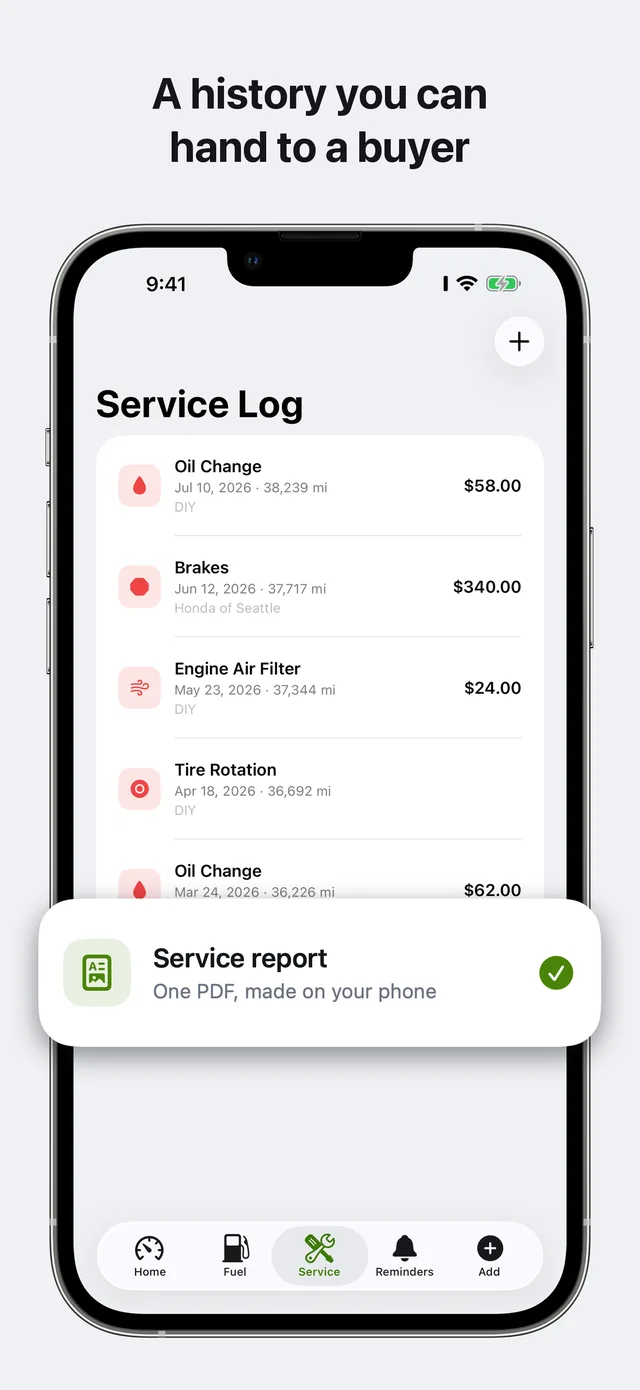
Never lose another repair receipt or fuel log
Keep your complete service history, real full-tank MPG, and diagnostic records organized on your iPhone. Carvico alerts you before service is overdue and gives you verified PDF records when you sell — 100% private on your own iCloud with zero ads.
Related Diagnostic Codes
Camshaft Position Actuator Circuit (Bank 1)
Electrical circuit fault in the intake variable valve timing (VVT) solenoid on cylinder Bank 1.
P0011Camshaft Position 'A' Timing Over-Advanced (Bank 1)
The intake camshaft timing on Bank 1 is further advanced than the ECU commanded.
P0012Camshaft Position 'A' Timing Over-Retarded (Bank 1)
The intake camshaft timing on Bank 1 is lagging behind the computer's commanded timing advance.
P0013Exhaust Camshaft Position Actuator Circuit (Bank 1)
Electrical fault detected in the exhaust variable valve timing (VVT) solenoid circuit on Bank 1.