Can You Keep Driving With Code P0506?
You can typically drive short distances to a qualified repair shop, provided the Check Engine light remains solid and is not flashing. Yes, but car may stall when stopping. However, operating under this condition forces the engine control module into altered fuel or timing strategies, accelerating wear on emissions hardware and reducing power under load. Inspect vital fluids before driving.
What Code P0506 Means
Trouble code P0506 is defined by standard SAE/ISO diagnostic protocols as Idle Air Control System RPM Lower Than Expected. The engine control computer monitors this circuit and mechanical subsystem continuously through dedicated telemetry sensors. When sensor readings or calculated performance metrics deviate outside calibrated factory boundaries for more than two consecutive drive cycles, the computer records Freeze Frame diagnostic data and illuminates the Check Engine light on your instrument cluster.
How the Electronic Throttle Control (ETC) & Idle Air Operates
Modern vehicles employ Drive-by-Wire (Electronic Throttle Control) systems eliminating mechanical throttle cables. The accelerator pedal incorporates dual hall-effect sensors (APP 1 and APP 2) that translate driver pedal demand into voltage signals sent to the ECM. In response, the ECM powers a reversible DC servo motor inside the electronic throttle body, rotating the butterfly valve while dual throttle position sensors (TPS 1 and TPS 2) confirm plate position in real-time.
To safeguard against uncommanded acceleration, the ECM continuously calculates correlation between the redundant sensor tracks. If voltage between TPS 1 and TPS 2 deviates by more than 0.2V, or if carbon buildup mechanically jams the throttle blade, the ECM triggers Fail-Safe (Limp Mode) operation, cutting fuel delivery and limiting engine speed to ~1,500 RPM for driver safety.
The Most Common Diagnostic Mistake
Don't Force Open Drive-by-Wire Throttle Blades by Hand: When cleaning an electronic throttle body, never use a screwdriver or force the throttle butterfly plate open with your fingers while the key is on. The internal plastic servo gear train has high reduction torque—forcing the plate strips gear teeth or damages internal return springs, requiring a full $350 throttle body replacement. Turn the key on and have a partner press the gas pedal, or disconnect the battery before gentle manual movement.
Common Symptoms & Driving Observations
When code P0506 triggers, drivers typically report one or more of the following physical driving symptoms:
- Engine shaking heavily at stoplights: Typical driving observation associated with Electronic Throttle Control (ETC) & Idle Air malfunctions under real-world road conditions.
- Car stalling when shifting into Drive or turning on AC: Observed while stopped at red lights or in Drive with your foot on the brake pedal.
- Check Engine light on: Illuminates steady on the dashboard to warn that onboard telemetry exceeded calibrated limits for two drive cycles.
Diagnostic Triage: Likely Causes & First Checks
To avoid spending money on unneeded parts, triage the most frequent failure points starting with the easiest and least expensive DIY checks first:
| Likely Cause | Subsystem | Triage Priority | Diagnostic Action |
|---|---|---|---|
| Heavy carbon sludge choking the throttle body bore | Electronic Throttle Control (ETC) & Idle Air | Check First (DIY) | Clean throttle body bore and plate thoroughly with carburetor / throttle cleaner. |
| Defective Idle Air Control valve | Electronic Throttle Control (ETC) & Idle Air | DIY Inspection | Perform idle relearn. |
| Low alternator voltage at idle | Electronic Throttle Control (ETC) & Idle Air | Bench Test | Replace IAC valve if RPM stays too low. |
Step-by-Step Diagnostic Protocol
Follow this systematic 4-step diagnostic protocol before ordering replacement parts:
Inspect Back of Throttle Plate for Carbon Lip [Inspection Light & Clean Cloth]
Remove the rubber air intake duct from the throttle body mouth. Shine a light behind the circular brass or aluminum butterfly plate. Look for a dense black carbon buildup ring around the bore.
Pass/Fail: The calibrated air gap around the circumference must be free of carbon sludge to permit steady idle airflow.
Graph Dual TPS Signal Correlation (TPS 1 vs TPS 2) [Scan Tool with Graphing / Oscilloscope]
Key ON, engine OFF. Slowly depress the accelerator pedal from 0% to 100% over 10 seconds while monitoring TPS 1 and TPS 2 voltages. TPS 1 typically sweeps from 0.5V to 4.5V, while TPS 2 mirrors from 4.5V down to 0.5V.
Pass/Fail: Voltage sweep must be smooth with zero dropouts, glitches, or spikes. The sum of TPS 1 + TPS 2 should equal 5.0V consistently.
Test Throttle Servo Motor Internal Resistance [Digital Multimeter (Ohms)]
Unplug the throttle body connector. Measure resistance across the two dedicated motor drive pins on the throttle body housing.
Pass/Fail: Internal DC motor resistance must measure between 1.5Ω and 6.0Ω. Infinite resistance indicates a burned motor coil.
Perform Factory Electronic Throttle Idle Relearn [Scan Tool / Manual Pedal Sweep Procedure]
After cleaning carbon or installing a new throttle body, perform the manufacturer-specific Idle Air Volume Relearn to recalibrate the ECM closed-throttle zero position.
Pass/Fail: Engine idle speed must settle smoothly between 650 and 750 RPM in Park with AC turned off.
Estimated Repair Costs: DIY vs Professional Shop
Average repair pricing based on OEM parts, standard labor times, and national independent repair shop rates:
| Repair / Replacement Stage | DIY Parts Only | Independent Mechanic | Dealership Service |
|---|---|---|---|
| Throttle Body Solvent Service & Idle Relearn | $15 – $35 | $95 – $170 | $160 – $260 |
| Electronic Throttle Body Assembly Replacement | $120 – $280 | $280 – $480 | $460 – $750 |
| Accelerator Pedal Position (APP) Sensor Unit | $75 – $160 | $180 – $310 | $290 – $480 |
Related Field Guides & Cost Tools
Learn how vacuum leaks, dirty throttle bodies, and ignition coils trigger misfire and lean codes.
Calculate your true cost of ownership, compare DIY savings against mechanic labor rates, and estimate your running cost per mile.
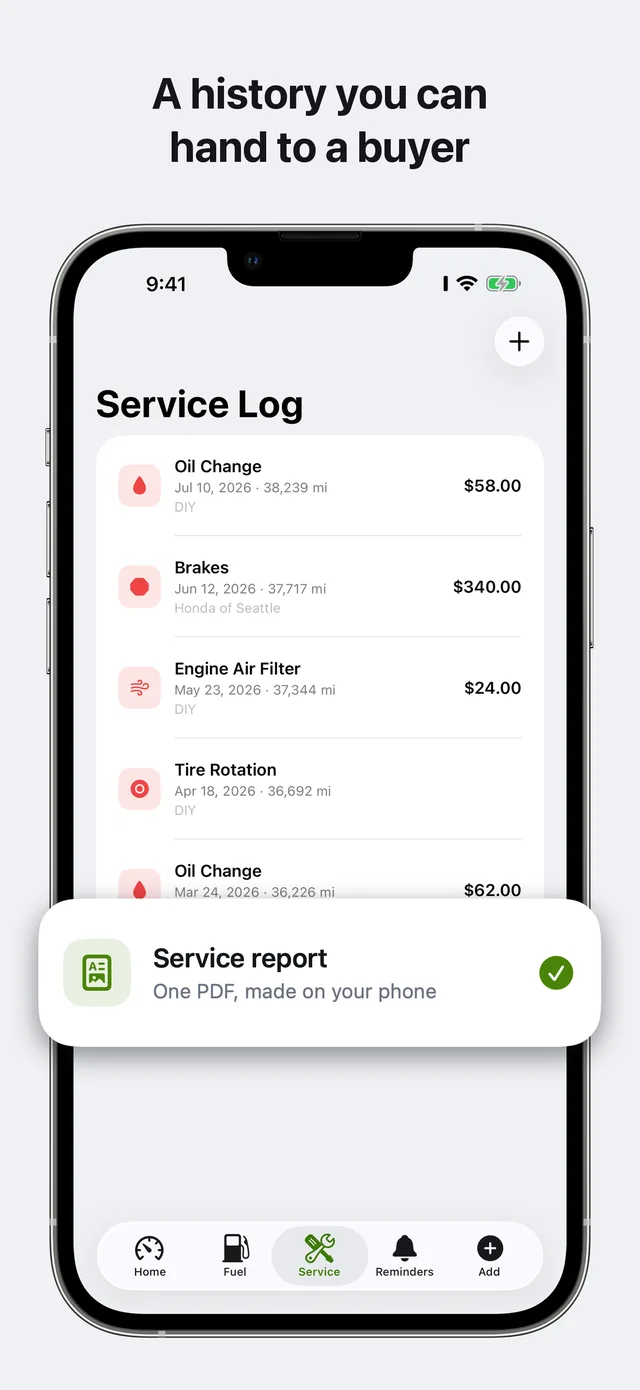
Never lose another repair receipt or fuel log
Keep your complete service history, real full-tank MPG, and diagnostic records organized on your iPhone. Carvico alerts you before service is overdue and gives you verified PDF records when you sell — 100% private on your own iCloud with zero ads.
Related Diagnostic Codes
Camshaft Position Actuator Circuit (Bank 1)
Electrical circuit fault in the intake variable valve timing (VVT) solenoid on cylinder Bank 1.
P0011Camshaft Position 'A' Timing Over-Advanced (Bank 1)
The intake camshaft timing on Bank 1 is further advanced than the ECU commanded.
P0012Camshaft Position 'A' Timing Over-Retarded (Bank 1)
The intake camshaft timing on Bank 1 is lagging behind the computer's commanded timing advance.
P0013Exhaust Camshaft Position Actuator Circuit (Bank 1)
Electrical fault detected in the exhaust variable valve timing (VVT) solenoid circuit on Bank 1.