Can You Keep Driving With Code P0401?
Driving with code P0401 active poses an immediate risk of permanent mechanical failure. Yes for limited driving. Prolonged driving with insufficient EGR can cause engine spark knock / pinging. Continued driving can cause valve-to-piston contact, catalytic converter melting from raw fuel dumping, or sudden loss of vehicle motive power. We strongly recommend parking the vehicle or having it towed to a certified repair facility.
What Code P0401 Means
Trouble code P0401 is defined by standard SAE/ISO diagnostic protocols as Exhaust Gas Recirculation (EGR) Flow Insufficient. The engine control computer monitors this circuit and mechanical subsystem continuously through dedicated telemetry sensors. When sensor readings or calculated performance metrics deviate outside calibrated factory boundaries for more than two consecutive drive cycles, the computer records Freeze Frame diagnostic data and illuminates the Check Engine light on your instrument cluster.
How the Exhaust Gas Recirculation (EGR) Subsystem Operates
The Exhaust Gas Recirculation (EGR) system meters inert exhaust gas back into the engine intake manifold during cruising. Because inert exhaust gases do not burn, they absorb thermal energy and dilute the air-fuel mixture, reducing peak combustion chamber temperatures below 2,500°F (1,370°C). This thermal suppression prevents nitrogen from bonding with oxygen, virtually eliminating harmful nitrogen oxide (NOx) tailpipe emissions.
The ECM modulates an electric or vacuum EGR solenoid valve. A position sensor on the valve stem or a Differential Pressure Feedback Electronic (DPFE) sensor measures exhaust flow. Over thousands of miles, exhaust soot and oil mist combine to form thick carbon deposits that choke the narrow EGR passage or freeze the valve pintle shut, triggering insufficient flow codes (P0401) or rough engine bucking (P0402).
The Most Common Diagnostic Mistake
Don't Replace EGR Valve Without Cleaning Intake Port: When P0401 (EGR Insufficient Flow Detected) appears, mechanics frequently bolt on a brand-new $180 EGR valve. Yet when they test drive, the code immediately returns. Why? Because the blockage was not inside the valve—it was located in the narrow 3/8-inch metal delivery tube or the cast aluminum passages inside the intake manifold. Always clear the carbon buildup out of the manifold ports with a wire brush and carb cleaner before bolting on the new valve.
Common Symptoms & Driving Observations
When code P0401 triggers, drivers typically report one or more of the following physical driving symptoms:
- Check Engine light on: Illuminates steady on the dashboard to warn that onboard telemetry exceeded calibrated limits for two drive cycles.
- Metallic pinging or knocking sound under acceleration: Felt as a flat spot or delayed throttle response when attempting to merge or pass on the highway.
- Failed state emissions smog test: Typical driving observation associated with Exhaust Gas Recirculation (EGR) Subsystem malfunctions under real-world road conditions.
- Slight engine hesitation at highway cruise: Felt as a flat spot or delayed throttle response when attempting to merge or pass on the highway.
Diagnostic Triage: Likely Causes & First Checks
To avoid spending money on unneeded parts, triage the most frequent failure points starting with the easiest and least expensive DIY checks first:
| Likely Cause | Subsystem | Triage Priority | Diagnostic Action |
|---|---|---|---|
| Carbon buildup clogging EGR passages in intake manifold | Exhaust Gas Recirculation (EGR) Subsystem | Check First (DIY) | Remove EGR valve and inspect for heavy black carbon clogging the valve seat and manifold port. |
| Defective or stuck EGR valve | Exhaust Gas Recirculation (EGR) Subsystem | DIY Inspection | Clean ports with carburetor cleaner and a wire brush. |
| Faulty differential pressure feedback EGR (DPFE) sensor | Exhaust Gas Recirculation (EGR) Subsystem | Bench Test | Test EGR valve vacuum diaphragm with a handheld vacuum pump. |
| Cracked or clogged EGR vacuum lines | Exhaust Gas Recirculation (EGR) Subsystem | Shop Diagnostic | Inspect DPFE silicone hoses for heat cracking or blockages. |
Step-by-Step Diagnostic Protocol
Follow this systematic 4-step diagnostic protocol before ordering replacement parts:
Bench Test EGR Valve Mechanical Pintle Movement [10mm/12mm Sockets, Carburetor Cleaner, Wire Brush]
Unbolt the EGR valve from the cylinder head or exhaust manifold. Inspect the internal stainless-steel pintle valve and port orifices for black carbon sludge.
Pass/Fail: The pintle valve must seat 100% airtight when closed. When depressed manually or energized with 12V, it must slide open smoothly with zero sticking.
Inspect Metal Delivery Tube and Intake Manifold Port [Flexible Wire Pipe Cleaner & Flashlight]
Follow the stainless-steel EGR delivery pipe into the intake manifold behind the throttle body. Probe the orifice with a stiff wire.
Pass/Fail: Passage must be completely hollow with zero black carbon restrictions choking flow.
Test Vacuum Diaphragm or Electronic Stepper Motor [Hand Vacuum Pump or Digital Multimeter (Ohms)]
For vacuum valves, apply 10 in-Hg of vacuum to the valve diaphragm while the engine idles. For electric stepper valves, measure coil resistance across terminal pins.
Pass/Fail: Applying vacuum to the EGR valve at idle must cause the engine to immediately stumble, run rough, or stall (proves exhaust gas is actively entering the manifold).
Inspect DPFE Sensor Hoses for Cracking or Water Condensation [Visual Inspection & Hand Pressure]
Inspect the two silicon rubber sampling hoses connecting the exhaust pressure pipe to the DPFE sensor.
Pass/Fail: Hoses must be intact with zero burn-through holes, cracks, or acidic water condensate plugging the tiny sensor ports.
Estimated Repair Costs: DIY vs Professional Shop
Average repair pricing based on OEM parts, standard labor times, and national independent repair shop rates:
| Repair / Replacement Stage | DIY Parts Only | Independent Mechanic | Dealership Service |
|---|---|---|---|
| EGR Valve Decarbonization & Port Cleaning | $15 – $35 | $95 – $170 | $160 – $260 |
| EGR Valve Assembly (OEM Electronic Pintle) | $75 – $180 | $210 – $340 | $320 – $490 |
| Differential Pressure Feedback (DPFE) Sensor | $35 – $75 | $110 – $190 | $180 – $280 |
Related Field Guides & Cost Tools
Calculate baseline annual maintenance funds and unexpected repair reserves for aging vehicles.
Calculate your true cost of ownership, compare DIY savings against mechanic labor rates, and estimate your running cost per mile.
Never lose another repair receipt or fuel log
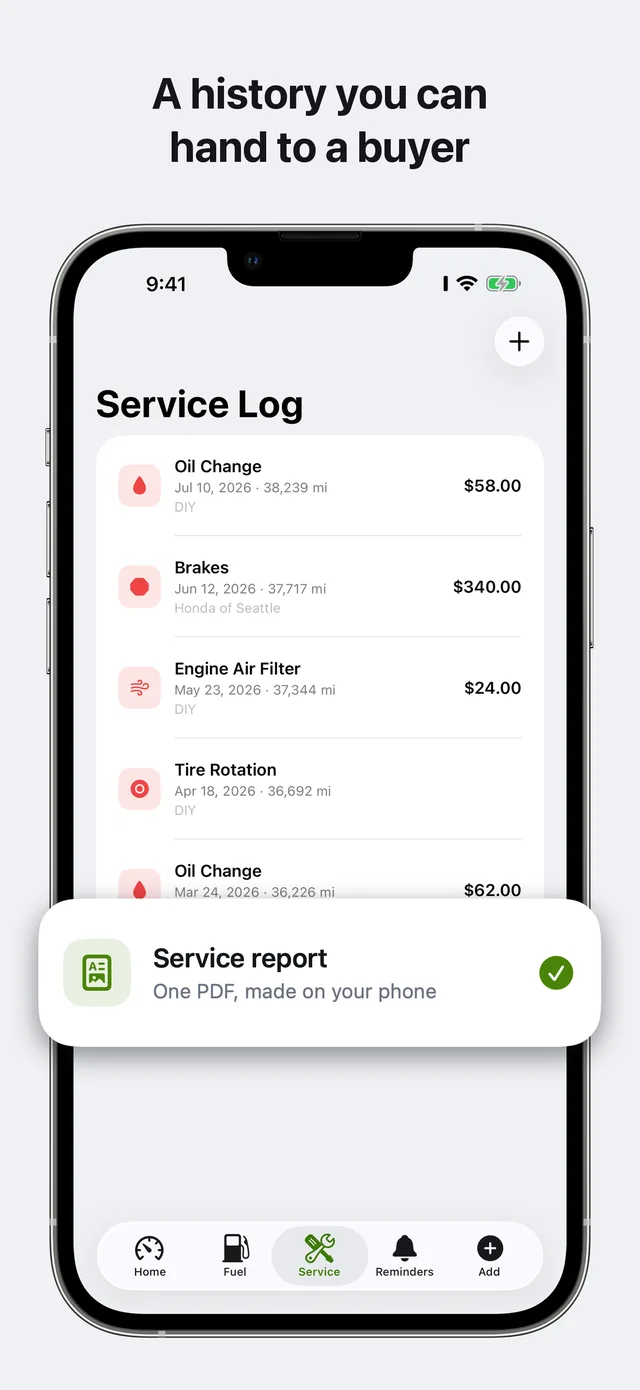
Keep your complete service history, real full-tank MPG, and diagnostic records organized on your iPhone. Carvico alerts you before service is overdue and gives you verified PDF records when you sell — 100% private on your own iCloud with zero ads.
Related Diagnostic Codes
Camshaft Position Actuator Circuit (Bank 1)
Electrical circuit fault in the intake variable valve timing (VVT) solenoid on cylinder Bank 1.
P0011Camshaft Position 'A' Timing Over-Advanced (Bank 1)
The intake camshaft timing on Bank 1 is further advanced than the ECU commanded.
P0012Camshaft Position 'A' Timing Over-Retarded (Bank 1)
The intake camshaft timing on Bank 1 is lagging behind the computer's commanded timing advance.
P0013Exhaust Camshaft Position Actuator Circuit (Bank 1)
Electrical fault detected in the exhaust variable valve timing (VVT) solenoid circuit on Bank 1.