Can You Keep Driving With Code P0335?
Driving with code P0335 active poses an immediate risk of permanent mechanical failure. NO. Vehicle may stall without warning while driving, losing power steering and braking assistance. Continued driving can cause valve-to-piston contact, catalytic converter melting from raw fuel dumping, or sudden loss of vehicle motive power. We strongly recommend parking the vehicle or having it towed to a certified repair facility.
What Code P0335 Means
Trouble code P0335 is defined by standard SAE/ISO diagnostic protocols as Crankshaft Position Sensor 'A' Circuit Malfunction. The engine control computer monitors this circuit and mechanical subsystem continuously through dedicated telemetry sensors. When sensor readings or calculated performance metrics deviate outside calibrated factory boundaries for more than two consecutive drive cycles, the computer records Freeze Frame diagnostic data and illuminates the Check Engine light on your instrument cluster.
How the Crankshaft, Camshaft & Knock Position Sensors Operates
The Crankshaft Position (CKP) and Camshaft Position (CMP) sensors provide the critical timing baseline for the entire engine management system. The CKP sensor monitors a toothed reluctor wheel attached to the crankshaft, generating digital square-wave pulses that calculate exact engine RPM and piston Top Dead Center (TDC) for Cylinder 1. The CMP sensor determines whether Cylinder 1 is on its compression or exhaust stroke.
Because these sensors sit directly on the engine block, transmission bellhousing, or cylinder head, they are subjected to extreme thermal cycles from -20°F to 230°F. Over years of thermal stress, internal copper windings develop micro-fractures that expand when hot, causing sudden signal dropouts that cause the engine to stall unexpectedly at highway speeds, followed by normal restarting once the sensor cools down.
The Most Common Diagnostic Mistake
Don't Buy Cheap Aftermarket Crankshaft Sensors: Crankshaft position sensors operate at extremely high frequencies (thousands of pulses per second). Inexpensive generic aftermarket sensors sourced online frequently have weak magnetic cores or poor heat shielding. They may start the car in your driveway but drop sync during highway speeds, causing intermittent stalling and no-start conditions. Always install genuine OEM or OEM-tier (Bosch, Denso, NGK) position sensors.
Common Symptoms & Driving Observations
When code P0335 triggers, drivers typically report one or more of the following physical driving symptoms:
- Engine cranks but will not start: Extended engine cranking time before firing, particularly after sitting overnight.
- Sudden engine stalling while driving: Observed while stopped at red lights or in Drive with your foot on the brake pedal.
- Tachometer needle does not move while cranking: Extended engine cranking time before firing, particularly after sitting overnight.
- Harsh engine bucking or misfiring: Typical driving observation associated with Crankshaft, Camshaft & Knock Position Sensors malfunctions under real-world road conditions.
Diagnostic Triage: Likely Causes & First Checks
To avoid spending money on unneeded parts, triage the most frequent failure points starting with the easiest and least expensive DIY checks first:
| Likely Cause | Subsystem | Triage Priority | Diagnostic Action |
|---|---|---|---|
| Failed crankshaft position sensor (CKP) | Crankshaft, Camshaft & Knock Position Sensors | Check First (DIY) | Watch the dashboard tachometer while cranking; if needle stays dead at 0 RPM, sensor is not sending pulses. |
| Broken, chafed, or melted sensor wiring harness | Crankshaft, Camshaft & Knock Position Sensors | DIY Inspection | Inspect sensor wiring for heat damage near the exhaust or serpentine belt. |
| Damaged or missing teeth on the crankshaft reluctor wheel | Crankshaft, Camshaft & Knock Position Sensors | Bench Test | Measure sensor resistance or check live RPM data on an OBD2 scanner. |
| Dead ECM circuit | Crankshaft, Camshaft & Knock Position Sensors | Shop Diagnostic | Replace crankshaft position sensor with OEM-quality sensor. |
Step-by-Step Diagnostic Protocol
Follow this systematic 4-step diagnostic protocol before ordering replacement parts:
Check Tachometer Movement During Engine Cranking [Instrument Cluster Tachometer / Scan Tool RPM PID]
Watch the dashboard tachometer needle while cranking the engine during a no-start condition.
Pass/Fail: The needle should wiggle up to ~200–300 RPM. A tachometer needle that stays completely dead at 0 RPM during cranking confirms the ECM is receiving zero pulses from the crankshaft sensor.
Inspect Sensor Tip for Metal Shavings and Sludge [10mm Socket & Clean Cloth]
Extract the magnetic position sensor from the engine block or timing cover. Inspect the magnetic tip.
Pass/Fail: Tip must be clean. Iron particles or metallic clutch shavings clinging to the magnet disrupt the reluctor magnetic field, corrupting the pulse signal.
Verify 5V/12V Power, Ground, and Signal Wire Continuity [Digital Multimeter (DC Volts)]
Backprobe the 3-wire sensor harness with key ON. Verify reference voltage, chassis ground, and signal ground integrity.
Pass/Fail: Reference circuit must measure stable 5.0V or 12V with less than 30mV drop on ground.
Capture Sensor Waveform with Oscilloscope [Digital Storage Oscilloscope (DSO)]
Connect scope probe to sensor signal wire while cranking. Observe the square-wave (Hall effect) or sine-wave (magnetic pickup) waveform.
Pass/Fail: Signal must display crisp, uniform wave peaks with zero missing teeth except for the factory TDC reference gap.
Estimated Repair Costs: DIY vs Professional Shop
Average repair pricing based on OEM parts, standard labor times, and national independent repair shop rates:
| Repair / Replacement Stage | DIY Parts Only | Independent Mechanic | Dealership Service |
|---|---|---|---|
| Camshaft Position Sensor (Single Unit OEM) | $35 – $85 | $120 – $220 | $190 – $320 |
| Crankshaft Position Sensor (CKP) Replacement | $45 – $110 | $160 – $290 | $260 – $440 |
| Piezo-Electric Knock Sensor Replacement | $35 – $95 | $180 – $340 | $290 – $480 |
Related Field Guides & Cost Tools
Labor rates, parts markup, and complex engine timing or transmission repairs where DIY risks exceed savings.
Calculate your true cost of ownership, compare DIY savings against mechanic labor rates, and estimate your running cost per mile.
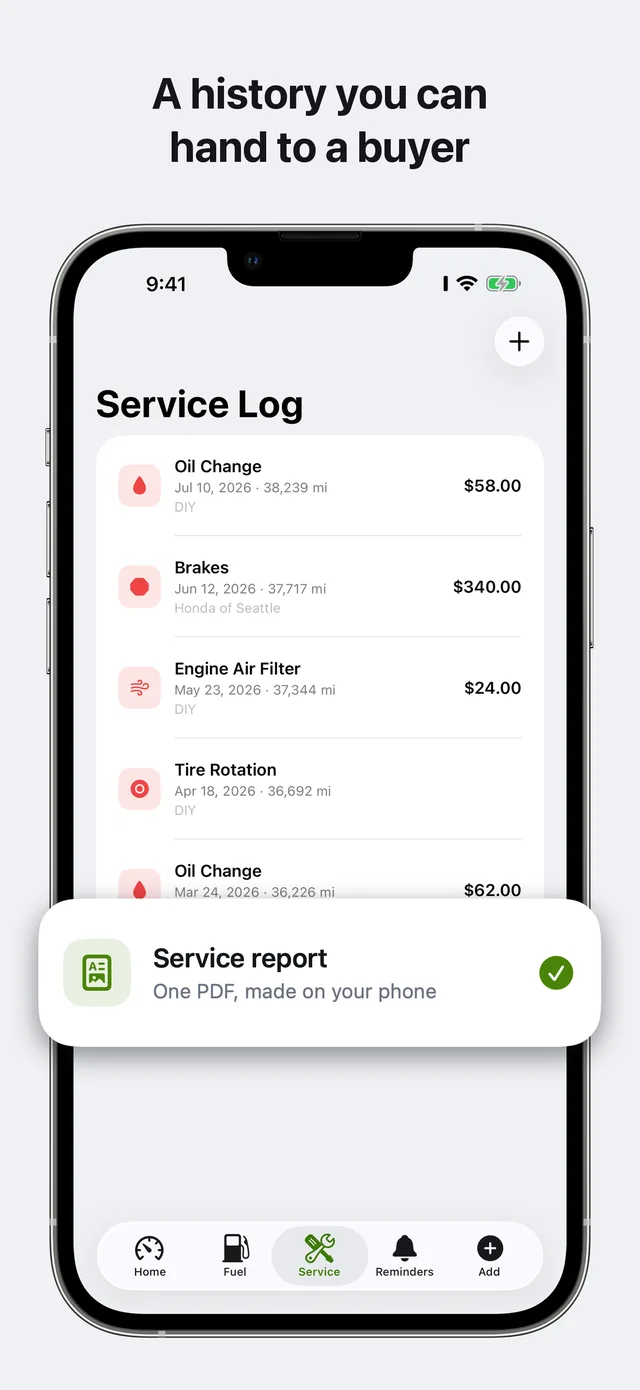
Never lose another repair receipt or fuel log
Keep your complete service history, real full-tank MPG, and diagnostic records organized on your iPhone. Carvico alerts you before service is overdue and gives you verified PDF records when you sell — 100% private on your own iCloud with zero ads.
Related Diagnostic Codes
Camshaft Position Actuator Circuit (Bank 1)
Electrical circuit fault in the intake variable valve timing (VVT) solenoid on cylinder Bank 1.
P0011Camshaft Position 'A' Timing Over-Advanced (Bank 1)
The intake camshaft timing on Bank 1 is further advanced than the ECU commanded.
P0012Camshaft Position 'A' Timing Over-Retarded (Bank 1)
The intake camshaft timing on Bank 1 is lagging behind the computer's commanded timing advance.
P0013Exhaust Camshaft Position Actuator Circuit (Bank 1)
Electrical fault detected in the exhaust variable valve timing (VVT) solenoid circuit on Bank 1.