Can You Keep Driving With Code P0200?
Driving with code P0200 active poses an immediate risk of permanent mechanical failure. NO if engine is misfiring heavily. Continued driving can cause valve-to-piston contact, catalytic converter melting from raw fuel dumping, or sudden loss of vehicle motive power. We strongly recommend parking the vehicle or having it towed to a certified repair facility.
What Code P0200 Means
Trouble code P0200 is defined by standard SAE/ISO diagnostic protocols as Injector Circuit Malfunction. The engine control computer monitors this circuit and mechanical subsystem continuously through dedicated telemetry sensors. When sensor readings or calculated performance metrics deviate outside calibrated factory boundaries for more than two consecutive drive cycles, the computer records Freeze Frame diagnostic data and illuminates the Check Engine light on your instrument cluster.
How the Fuel Delivery, High-Pressure Rail & Injectors Operates
Modern direct injection (GDI) and port fuel injection (PFI) systems deliver precisely metered fuel under extreme pressures. In GDI systems, a mechanical camshaft-driven high-pressure fuel pump (HPFP) boosts low tank pressure (50–70 PSI) up to 2,000–3,500 PSI inside the stainless-steel fuel rail. The ECM commands piezo-electric or solenoid injectors in sub-millisecond pulses directly into the combustion chamber during the intake or compression stroke.
A Fuel Rail Pressure (FRP) sensor monitors rail pressure continuously. If fuel filter restriction, failing tank lift pump, or HPFP internal check valve failure causes rail pressure to drop below target demand, the ECM cannot deliver required fuel mass. The resulting lean combustion spikes combustion temperatures, triggers misfires under load, and illuminates Check Engine fault codes.
The Most Common Diagnostic Mistake
Don't Blame the In-Tank Pump Before Checking Cam Follower: On many European and domestic direct-injected engines, the mechanical high-pressure fuel pump is driven by an extra lobe on the intake camshaft via a bucket tappet (cam follower). Over time, poor oil lubrication wears a hole through this $30 follower, grinding down the pump piston and camshaft lobe. Owners often spend $600 replacing the tank fuel pump when the real problem was the worn mechanical follower on the cylinder head.
Common Symptoms & Driving Observations
When code P0200 triggers, drivers typically report one or more of the following physical driving symptoms:
- Engine misfiring: Typical driving observation associated with Fuel Delivery, High-Pressure Rail & Injectors malfunctions under real-world road conditions.
- Rough idle: Observed while stopped at red lights or in Drive with your foot on the brake pedal.
- Strong fuel odor: Causes 10% to 25% drop in full-tank fuel economy due to open-loop enrichment or inefficient cam phasing.
- Loss of power: Felt as a flat spot or delayed throttle response when attempting to merge or pass on the highway.
Diagnostic Triage: Likely Causes & First Checks
To avoid spending money on unneeded parts, triage the most frequent failure points starting with the easiest and least expensive DIY checks first:
| Likely Cause | Subsystem | Triage Priority | Diagnostic Action |
|---|---|---|---|
| Chafed injector wiring harness | Fuel Delivery, High-Pressure Rail & Injectors | Check First (DIY) | Inspect injector wiring harness for rodent chew marks. |
| Blown injector fuse | Fuel Delivery, High-Pressure Rail & Injectors | DIY Inspection | Check resistance of each fuel injector. |
| Faulty injector driver in ECM | Fuel Delivery, High-Pressure Rail & Injectors | Bench Test | Test injector pulse with noid lights. |
Step-by-Step Diagnostic Protocol
Follow this systematic 4-step diagnostic protocol before ordering replacement parts:
Compare Commanded vs Actual Rail Pressure [OBD-II Scan Tool Live Data]
Connect scan tool and monitor Fuel Rail Pressure Desired vs Fuel Rail Pressure Actual while accelerating at wide-open throttle in 3rd gear.
Pass/Fail: Actual pressure must track desired pressure within ±50 PSI. Sudden pressure drop under load confirms a failing high-pressure pump or clogged filter.
Measure Low-Pressure Lift Pump Delivery at Rail Inlet [Mechanical Fuel Pressure Gauge Kit with Schrader Adapter]
Tee a mechanical pressure gauge into the low-pressure supply line entering the high-pressure pump or port fuel rail. Cycle the key to test prime pressure.
Pass/Fail: In-tank lift pump should maintain 55–72 PSI immediately upon key prime and hold residual pressure for at least 15 minutes after shutoff.
Perform Injector Balance / Flow Rate Drop Test [Scan Tool Actuation Test Mode / Fuel Pressure Gauge]
Using bidirectional scan tool commands, pulse each fuel injector individually for a precise duration while observing the drop on a mechanical rail gauge.
Pass/Fail: Each cylinder should exhibit identical pressure drop (within 2–3 PSI). An injector with minimal pressure drop is clogged; excessive drop indicates a leaking needle.
Inspect High-Pressure Cam Follower for Wear [Triple-Square / Torx Sockets & Inspection Light]
On direct-injection engines with cam-driven HPFP, unbolt the pump and slide out the bucket follower. Inspect the hardened diamond-like carbon (DLC) coating.
Pass/Fail: Follower surface must be mirror-smooth with zero gouging, pitting, or punched-through center holes.
Estimated Repair Costs: DIY vs Professional Shop
Average repair pricing based on OEM parts, standard labor times, and national independent repair shop rates:
| Repair / Replacement Stage | DIY Parts Only | Independent Mechanic | Dealership Service |
|---|---|---|---|
| Fuel Filter / In-Tank Strainer Replacement | $25 – $65 | $110 – $190 | $180 – $280 |
| Single Fuel Injector Replacement (OEM GDI) | $85 – $220 | $280 – $480 | $460 – $750 |
| High-Pressure Fuel Pump (HPFP) Assembly | $280 – $650 | $620 – $1,100 | $950 – $1,600 |
Related Field Guides & Cost Tools
Calculate baseline annual maintenance funds and unexpected repair reserves for aging vehicles.
Calculate your true cost of ownership, compare DIY savings against mechanic labor rates, and estimate your running cost per mile.
Never lose another repair receipt or fuel log
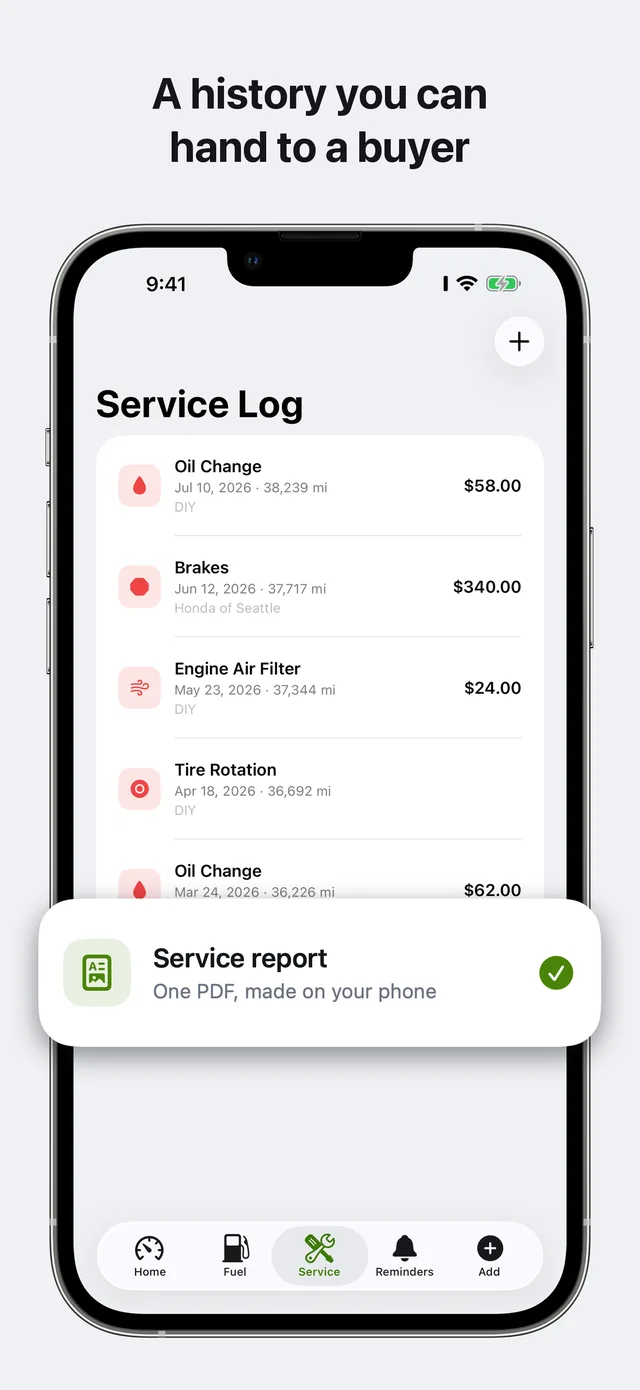
Keep your complete service history, real full-tank MPG, and diagnostic records organized on your iPhone. Carvico alerts you before service is overdue and gives you verified PDF records when you sell — 100% private on your own iCloud with zero ads.
Related Diagnostic Codes
Camshaft Position Actuator Circuit (Bank 1)
Electrical circuit fault in the intake variable valve timing (VVT) solenoid on cylinder Bank 1.
P0011Camshaft Position 'A' Timing Over-Advanced (Bank 1)
The intake camshaft timing on Bank 1 is further advanced than the ECU commanded.
P0012Camshaft Position 'A' Timing Over-Retarded (Bank 1)
The intake camshaft timing on Bank 1 is lagging behind the computer's commanded timing advance.
P0013Exhaust Camshaft Position Actuator Circuit (Bank 1)
Electrical fault detected in the exhaust variable valve timing (VVT) solenoid circuit on Bank 1.