Can You Keep Driving With Code P0128?
Driving with code P0128 active poses an immediate risk of permanent mechanical failure. Yes. Safe to drive temporarily, but heater will blow lukewarm air and fuel economy drops 10–15%. Continued driving can cause valve-to-piston contact, catalytic converter melting from raw fuel dumping, or sudden loss of vehicle motive power. We strongly recommend parking the vehicle or having it towed to a certified repair facility.
What Code P0128 Means
Trouble code P0128 is defined by standard SAE/ISO diagnostic protocols as Coolant Temperature Below Thermostat Regulating Temperature. The engine control computer monitors this circuit and mechanical subsystem continuously through dedicated telemetry sensors. When sensor readings or calculated performance metrics deviate outside calibrated factory boundaries for more than two consecutive drive cycles, the computer records Freeze Frame diagnostic data and illuminates the Check Engine light on your instrument cluster.
How the Engine Thermal Management & Thermostat Operates
The engine cooling system regulates internal combustion temperatures within an optimal window of 195°F to 220°F (90°C to 105°C). The Engine Coolant Temperature (ECT) sensor utilizes a negative temperature coefficient (NTC) thermistor whose electrical resistance decreases as coolant warms. The ECM monitors ECT voltage to determine fuel enrichment during cold starts, initiate closed-loop fuel control, modulate electric cooling fans, and adjust ignition advance.
A mechanical wax-pellet thermostat blocks coolant flow through the radiator until the engine reaches operating temperature. If the thermostat sticks open, coolant continuously circulates through the radiator on cold mornings. The ECM calculates how long the engine has run; if coolant temperature fails to reach closed-loop threshold (~175°F) within a pre-programmed mileage or runtime window, code P0128 is triggered and fuel efficiency plummets.
The Most Common Diagnostic Mistake
Don't Ignore a 'Stuck Open' Thermostat in Winter: Many drivers assume a thermostat stuck open is harmless because the engine doesn't overheat. In reality, running below operating temperature keeps the ECM trapped in 'warm-up enrichment' mode, constantly dumping 15–20% extra fuel into the cylinders. This unburned fuel washes protective oil film from cylinder walls, promotes engine sludge, dilutes engine oil, and kills fuel economy by 3–5 MPG.
Common Symptoms & Driving Observations
When code P0128 triggers, drivers typically report one or more of the following physical driving symptoms:
- Check engine light illuminated: Illuminates steady on the dashboard to warn that onboard telemetry exceeded calibrated limits for two drive cycles.
- Temperature gauge on dash takes 15+ minutes to rise or stays low: Typical driving observation associated with Engine Thermal Management & Thermostat malfunctions under real-world road conditions.
- Cabin heater blows lukewarm instead of hot air in winter: Typical driving observation associated with Engine Thermal Management & Thermostat malfunctions under real-world road conditions.
- Fuel economy decreases as engine stays in warm-up enrichment mode: Causes 10% to 25% drop in full-tank fuel economy due to open-loop enrichment or inefficient cam phasing.
Diagnostic Triage: Likely Causes & First Checks
To avoid spending money on unneeded parts, triage the most frequent failure points starting with the easiest and least expensive DIY checks first:
| Likely Cause | Subsystem | Triage Priority | Diagnostic Action |
|---|---|---|---|
| Thermostat stuck open or opening too early | Engine Thermal Management & Thermostat | Check First (DIY) | Feel the upper radiator hose during a cold start; if it gets warm immediately, the thermostat is stuck open. |
| Faulty Engine Coolant Temperature (ECT) sensor reading too low | Engine Thermal Management & Thermostat | DIY Inspection | Check coolant level in the overflow bottle and top up if needed. |
| Low coolant level with air pockets in the cooling system | Engine Thermal Management & Thermostat | Bench Test | Replace the engine thermostat and gasket, and refill with fresh antifreeze. |
| Radiator cooling fan running continuously | Engine Thermal Management & Thermostat | Shop Diagnostic | Bleed air bubbles from the cooling system completely. |
Step-by-Step Diagnostic Protocol
Follow this systematic 4-step diagnostic protocol before ordering replacement parts:
Monitor Live ECT Warm-Up Temperature Curve [OBD-II Scan Tool Live Data]
Start engine cold in morning while graphing ECT sensor data. Observe rate of temperature rise. Engine should reach 180°F–195°F within 7–10 minutes of moderate driving.
Pass/Fail: Temperature should rise steadily and stabilize near 195°F–215°F. Dropping temperature during highway coasting indicates a stuck-open thermostat.
Touch Test Upper vs Lower Radiator Hoses [Infrared Thermometer or Insulated Glove]
While the engine warms from cold, feel the upper and lower radiator hoses. The upper hose should warm first. The lower hose should remain completely cold until the thermostat opens at ~190°F.
Pass/Fail: If both hoses warm up simultaneously from initial cold start, the thermostat is stuck open or missing.
Measure ECT Sensor Resistance vs Temperature [Digital Multimeter (Ohms) & IR Thermometer]
Unplug the ECT sensor connector. Measure resistance across the two pins at cold ambient temp (approx 2,500Ω–3,500Ω at 68°F) and again at hot operating temp (approx 200Ω–350Ω at 200°F).
Pass/Fail: Resistance must drop smoothly as engine temperature rises according to factory NTC curve.
Pressure Test Cooling System for External/Internal Leaks [Radiator Pressure Tester (Hand Pump & Gauge)]
Fit pressure tester to radiator neck or expansion tank. Pump to system cap pressure (typically 14–16 PSI) with engine off. Observe gauge for 15 minutes.
Pass/Fail: System must hold target pressure with zero decay. Look for leaks around water pump weep hole, hose clamps, and thermostat housing.
Estimated Repair Costs: DIY vs Professional Shop
Average repair pricing based on OEM parts, standard labor times, and national independent repair shop rates:
| Repair / Replacement Stage | DIY Parts Only | Independent Mechanic | Dealership Service |
|---|---|---|---|
| Engine Thermostat & Gasket Replacement | $25 – $65 | $160 – $280 | $260 – $420 |
| Engine Coolant Temperature (ECT) Sensor | $20 – $55 | $110 – $190 | $180 – $290 |
| Cooling System Flush & Vacuum Air Bleed | $35 – $70 | $120 – $190 | $190 – $290 |
Related Field Guides & Cost Tools
How coolant loss and thermostat failures distinguish normal cold starts from head gasket leaks.
Calculate your true cost of ownership, compare DIY savings against mechanic labor rates, and estimate your running cost per mile.
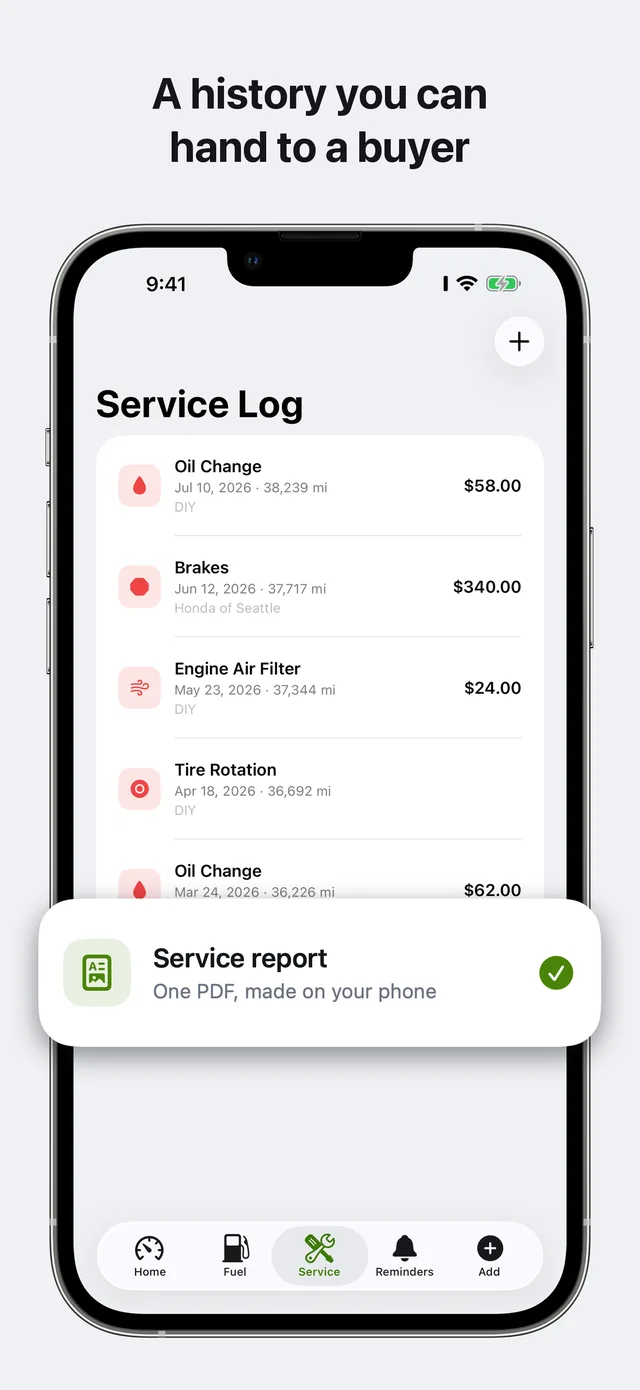
Never lose another repair receipt or fuel log
Keep your complete service history, real full-tank MPG, and diagnostic records organized on your iPhone. Carvico alerts you before service is overdue and gives you verified PDF records when you sell — 100% private on your own iCloud with zero ads.
Related Diagnostic Codes
Camshaft Position Actuator Circuit (Bank 1)
Electrical circuit fault in the intake variable valve timing (VVT) solenoid on cylinder Bank 1.
P0011Camshaft Position 'A' Timing Over-Advanced (Bank 1)
The intake camshaft timing on Bank 1 is further advanced than the ECU commanded.
P0012Camshaft Position 'A' Timing Over-Retarded (Bank 1)
The intake camshaft timing on Bank 1 is lagging behind the computer's commanded timing advance.
P0013Exhaust Camshaft Position Actuator Circuit (Bank 1)
Electrical fault detected in the exhaust variable valve timing (VVT) solenoid circuit on Bank 1.