Can You Keep Driving With Code P0107?
You can typically drive short distances to a qualified repair shop, provided the Check Engine light remains solid and is not flashing. Yes, but drivability will suffer. However, operating under this condition forces the engine control module into altered fuel or timing strategies, accelerating wear on emissions hardware and reducing power under load. Inspect vital fluids before driving.
What Code P0107 Means
Trouble code P0107 is defined by standard SAE/ISO diagnostic protocols as Manifold Absolute Pressure (MAP) Circuit Low Input. The engine control computer monitors this circuit and mechanical subsystem continuously through dedicated telemetry sensors. When sensor readings or calculated performance metrics deviate outside calibrated factory boundaries for more than two consecutive drive cycles, the computer records Freeze Frame diagnostic data and illuminates the Check Engine light on your instrument cluster.
How the Mass Airflow (MAF) & Intake Dynamics Operates
The engine uses either a Mass Airflow (MAF) sensor or Manifold Absolute Pressure (MAP) sensor to calculate the exact mass of air entering the engine cylinders per second. A hot-wire MAF sensor utilizes a microscopic heated platinum filament maintained at a constant 390°F above incoming ambient air. As intake air rushes across the wire, it cools the filament; the sensor draws varying electric current to keep the temperature constant, translating current flow into an analog voltage or digital frequency sent to the ECM.
Because air mass calculation forms the foundation of all fuel injector pulse width tables, any discrepancy creates immediate driveability hesitation. Over time, crankcase oil mist from the PCV system or fibers from substandard air filters bake onto the heated platinum filament, creating an insulating thermal barrier. The sensor under-reports incoming air mass, leading the ECM to inject insufficient fuel, creating lean hesitations, throttle lag, and transmission shift irregularities.
The Most Common Diagnostic Mistake
Don't Touch the Hot Wire with Cotton Swabs: When attempting to clean a mass airflow sensor, many DIYers use cotton swabs or abrasive paper to scrub the wire. The platinum sensing filament is thinner than a human hair and suspended on microscopic ceramic posts—touching it with a swab will bend or snap the wire instantly, destroying a $200 sensor. Always spray only with dedicated aerosol MAF cleaner from 3–4 inches away and let it air-dry completely.
Common Symptoms & Driving Observations
When code P0107 triggers, drivers typically report one or more of the following physical driving symptoms:
- Hard starting / long crank: Extended engine cranking time before firing, particularly after sitting overnight.
- Engine stalling at idle: Observed while stopped at red lights or in Drive with your foot on the brake pedal.
- Poor fuel economy: Causes 10% to 25% drop in full-tank fuel economy due to open-loop enrichment or inefficient cam phasing.
- Sluggish throttle: Felt as a flat spot or delayed throttle response when attempting to merge or pass on the highway.
Diagnostic Triage: Likely Causes & First Checks
To avoid spending money on unneeded parts, triage the most frequent failure points starting with the easiest and least expensive DIY checks first:
| Likely Cause | Subsystem | Triage Priority | Diagnostic Action |
|---|---|---|---|
| Short to ground on MAP signal wire | Mass Airflow (MAF) & Intake Dynamics | Check First (DIY) | Verify 5V reference voltage at harness plug. |
| Broken 5V reference wire | Mass Airflow (MAF) & Intake Dynamics | DIY Inspection | Check ground wire continuity. |
| Disconnected sensor plug | Mass Airflow (MAF) & Intake Dynamics | Bench Test | Replace MAP sensor. |
| Failed MAP sensor | Mass Airflow (MAF) & Intake Dynamics | Shop Diagnostic | Verify 5V reference voltage at harness plug. |
Step-by-Step Diagnostic Protocol
Follow this systematic 4-step diagnostic protocol before ordering replacement parts:
Inspect Intake Boot Folds for Hidden Splits [Flashlight & Hands]
Remove the air cleaner lid and inspect the flexible rubber accordion hose leading to the throttle body. Stretch the accordion ribs to inspect the lower valley folds where oil mist rots the rubber.
Pass/Fail: Duct must be 100% airtight. Any tear allows unmetered false air to bypass the MAF sensor.
Check MAF Grams-per-Second (g/s) Telemetry [OBD-II Scan Tool Live Data]
Monitor the MAF PID with engine at normal operating temperature and AC turned off. Rule of thumb: a healthy engine at idle should flow roughly 1 gram per second of air per liter of engine displacement (e.g. a 2.5L engine flows ~2.5 g/s at 700 RPM idle).
Pass/Fail: Idle reading must match displacement rule within 15%. At wide-open throttle (WOT) to redline in 2nd gear, reading should peak at ~80% of horsepower rating.
Clean Hot-Wire with Dedicated Aerosol Solvent [Aerosol MAF Cleaner & Torx Bit]
Remove the MAF sensor housing. Give the internal heated wire and ambient thermistor bead 10–12 generous bursts of aerosol cleaner. Do not use brake cleaner or carburetor dip.
Pass/Fail: Wire must be shiny metallic platinum with zero black carbon residue or fiber deposits.
Verify Reference 5V Power and Chassis Ground [Digital Multimeter (DC Volts)]
Backprobe the MAF electrical connector with ignition key on. Check for 12V battery power, 5.0V regulated reference from the ECM, and clean signal ground (<50mV drop).
Pass/Fail: Reference circuit must measure 5.00V ± 0.05V with zero voltage drop on ground wire.
Estimated Repair Costs: DIY vs Professional Shop
Average repair pricing based on OEM parts, standard labor times, and national independent repair shop rates:
| Repair / Replacement Stage | DIY Parts Only | Independent Mechanic | Dealership Service |
|---|---|---|---|
| Intake Air Boot / Duct Replacement | $25 – $65 | $95 – $180 | $160 – $280 |
| Mass Airflow (MAF) Sensor Replacement | $75 – $180 | $190 – $320 | $320 – $490 |
| Manifold Absolute Pressure (MAP) Sensor | $40 – $95 | $130 – $220 | $210 – $350 |
Related Field Guides & Cost Tools
Calculate baseline annual maintenance funds and unexpected repair reserves for aging vehicles.
Calculate your true cost of ownership, compare DIY savings against mechanic labor rates, and estimate your running cost per mile.
Never lose another repair receipt or fuel log
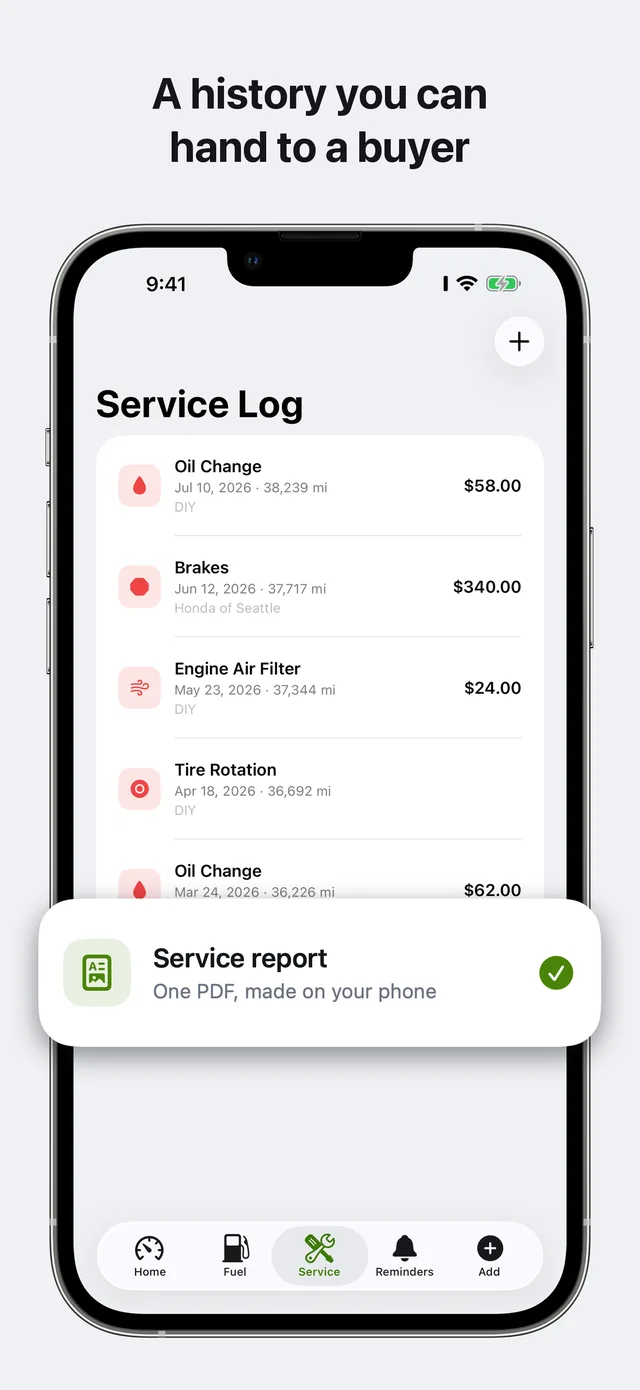
Keep your complete service history, real full-tank MPG, and diagnostic records organized on your iPhone. Carvico alerts you before service is overdue and gives you verified PDF records when you sell — 100% private on your own iCloud with zero ads.
Related Diagnostic Codes
Camshaft Position Actuator Circuit (Bank 1)
Electrical circuit fault in the intake variable valve timing (VVT) solenoid on cylinder Bank 1.
P0011Camshaft Position 'A' Timing Over-Advanced (Bank 1)
The intake camshaft timing on Bank 1 is further advanced than the ECU commanded.
P0012Camshaft Position 'A' Timing Over-Retarded (Bank 1)
The intake camshaft timing on Bank 1 is lagging behind the computer's commanded timing advance.
P0013Exhaust Camshaft Position Actuator Circuit (Bank 1)
Electrical fault detected in the exhaust variable valve timing (VVT) solenoid circuit on Bank 1.